
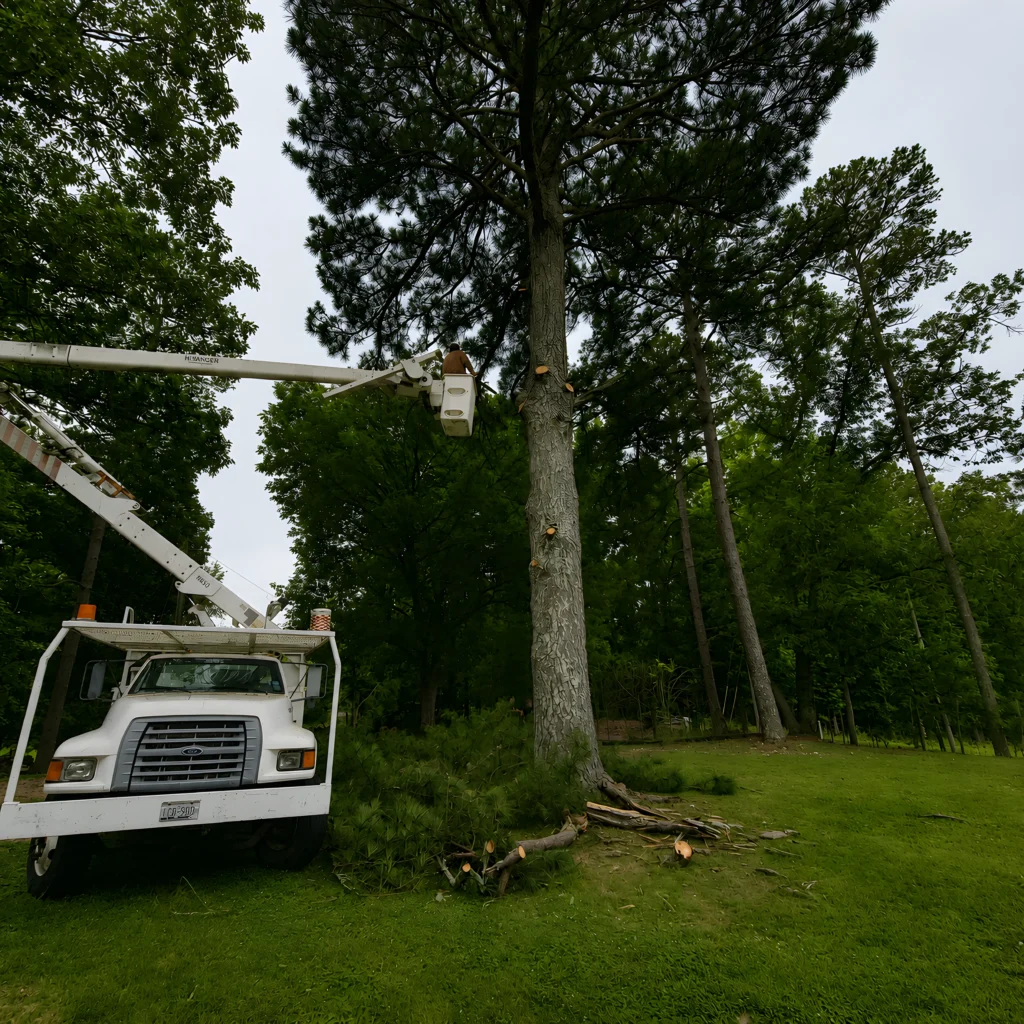
Emergency Tree Removal In Hot Springs, AR
Professional emergency tree service when safety can’t wait.
Fully licensed & insured │ Locally owned & operated │ Residential & commercial │Emergency response available


When Emergency Tree Service Is Necessary
Emergency tree service is needed when a tree or large limb becomes an immediate safety risk. Unlike routine trimming or planned removal, emergencies are defined by urgency—situations where delay increases the chance of injury, property damage, or access obstruction.
Common emergency scenarios include storm-damaged trees that have partially failed, trees uprooted or leaning after heavy wind or rain, and large limbs hanging over homes, vehicles, or walkways. Even if a tree has not fully fallen, compromised root systems or split trunks can turn a stable situation into a dangerous one quickly.
Emergency response is also necessary when trees block driveways, roads, or access points, or when damage interferes with utilities or critical movement around a property. In these cases, the goal is not cosmetic improvement—it’s stabilizing the situation and removing immediate risk.
Not every damaged tree requires full removal during an emergency response. In some cases, selective cutting or controlled limb removal is enough to make the site safe until permanent work can be scheduled. A professional assessment helps determine the safest next step without escalating risk.
Our Emergency Tree Service Process
Emergency tree work requires a different mindset than routine service. The priority is stability, safety, and control, not speed alone.
1) Rapid assessment of hazards
We begin by identifying immediate threats: unstable limbs, compromised trunks, shifting root plates, nearby structures, and access limitations. Storm-damaged trees often behave unpredictably, so understanding load and tension is critical before any cutting begins.
2) Secure the area and control risk
Work zones are established to keep people, pets, and property clear. Emergency jobs often involve working around damaged structures, vehicles, or debris, which requires careful positioning and planning.
3) Stabilization or controlled removal
Depending on the situation, work may involve removing hanging limbs, sectioning unstable portions of the tree, or fully removing the tree if it cannot be made safe. Cuts are made deliberately to manage weight, movement, and stored tension.
4) Clear access and restore safety
Once the immediate hazard is addressed, blocked driveways, walkways, or access points are cleared so the property can function again. Full cleanup or follow-up services can be scheduled once the emergency phase is complete.
The objective is simple: make the situation safe without creating new problems.
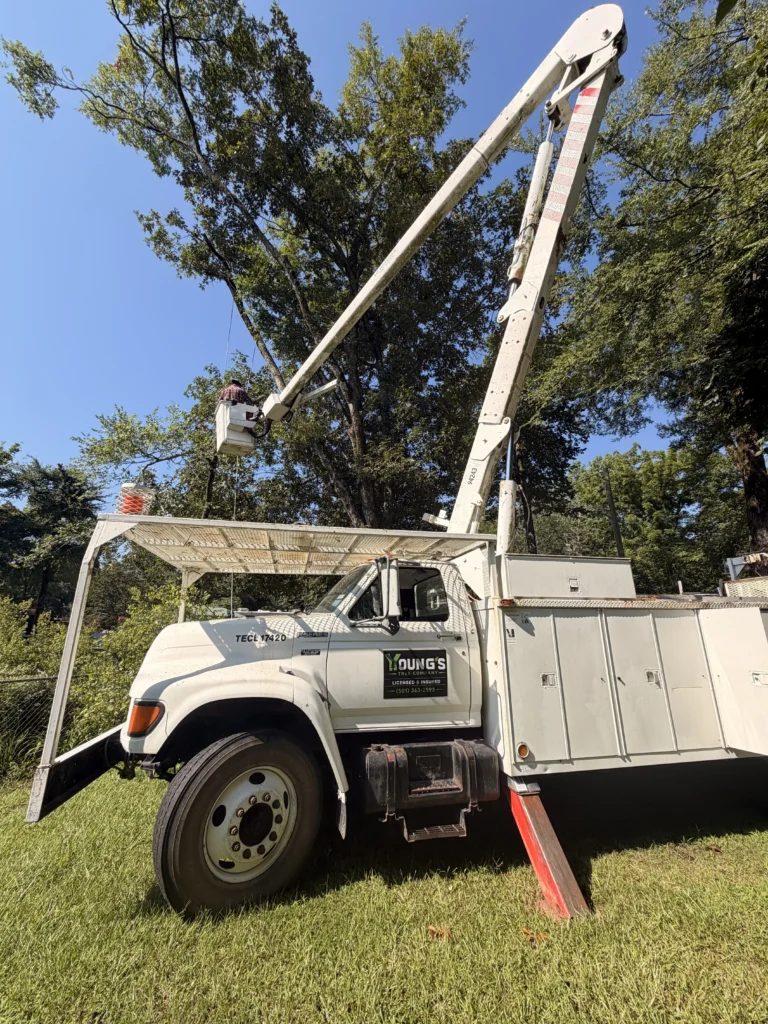
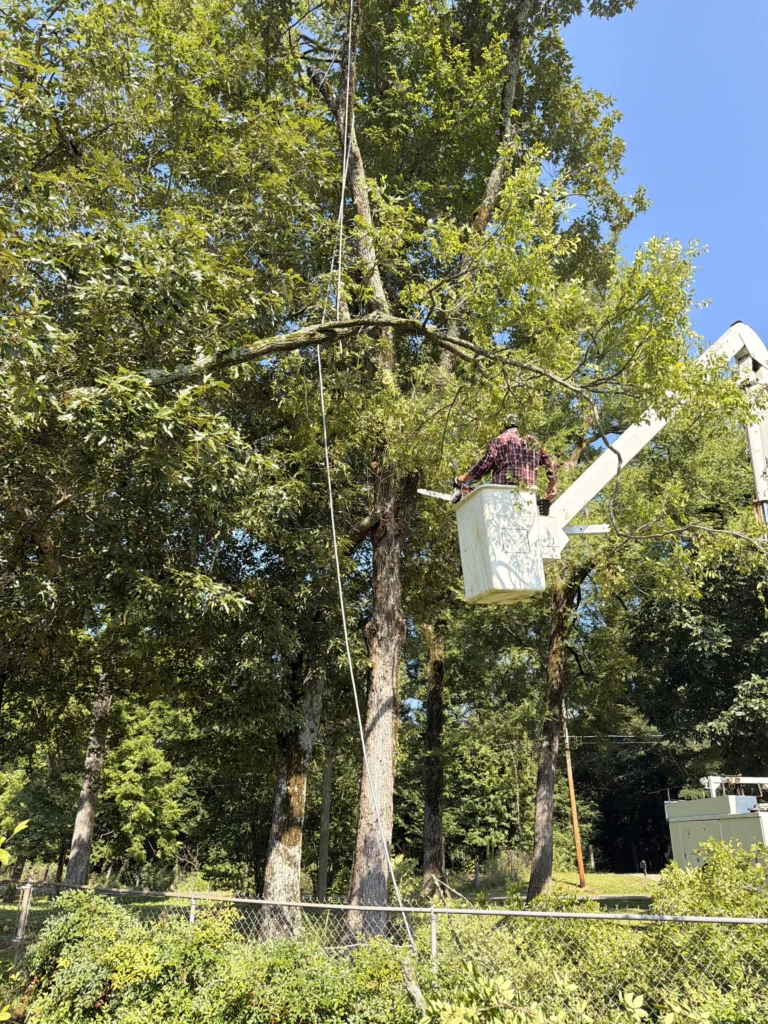
Safety & Emergency Response Standards
Emergency tree service carries elevated risk. Storm damage introduces internal stress, unpredictable movement, and compromised structural integrity—conditions that require caution and experience.
One of the most significant dangers in emergency tree work is stored energy. Broken or partially attached limbs may be under tension or compression, and improper cutting can cause sudden movement. Professional operators plan cuts carefully to release forces in a controlled way.
Electrical hazards are another major concern. Storm-damaged trees frequently involve downed or nearby power lines. Contact between tools, branches, equipment, or people and energized lines can be fatal. In many situations, coordination with utility providers or specialized procedures are required before work can proceed safely.
Emergency work is not about rushing. It’s about making informed decisions under pressure, using controlled techniques, and knowing when a situation requires additional resources or delayed action for safety reasons.
Ready To Get Started?
Residential & Commercial Emergency Tree Service
Residential emergency tree service focuses on protecting people and homes. Homeowners typically call when a tree has fallen on or near a structure, when large limbs are threatening roofs or vehicles, or when access to the property is blocked. The priority is restoring safety and stability so the homeowner can move forward.
Common residential emergencies include:
- Storm-damaged or leaning trees
- Hanging or broken limbs over structures
- Blocked driveways or access points
- Trees uprooted after heavy rain or wind
Commercial emergency tree service often involves access restoration and liability reduction. Fallen trees blocking entrances, parking areas, or walkways can create safety hazards and disrupt operations. Emergency response helps stabilize the situation quickly so properties remain functional and safe.
Whether residential or commercial, emergency tree service is about reducing risk first—then planning next steps once the immediate danger has passed.
Local Experience in Hot Springs
Storm patterns, soil conditions, and terrain all influence how trees fail and how emergency work should be approached. Local experience matters because it helps crews anticipate what they’re likely to encounter before they arrive on site.
In the Hot Springs area, heavy rain can saturate soil and weaken root systems, increasing the likelihood of uprooted or leaning trees after storms. Wind damage often exposes hidden weaknesses that aren’t obvious until failure begins.
Understanding local conditions helps inform safer decisions—where to cut first, how a tree may shift once weight is removed, and when a situation requires staged work rather than immediate removal. Emergency response is most effective when it’s guided by experience, not guesswork.
Check out our additional services for all your tree needs in Hot Springs, AR: Tree Removal; Trimming; Stump Grinding
Emergency Tree Service FAQs
What qualifies as a tree emergency?
Any situation where a tree or limb poses an immediate safety risk—such as hanging branches, fallen trees, or trees leaning toward structures—can be considered an emergency.
How quickly can emergency service be provided?
Response times vary based on weather conditions, severity of damage, and safety considerations. The first priority is assessing whether the situation can be addressed safely at that time.
Do you remove the entire tree during an emergency call?
Not always. In many cases, removing the immediate hazard is enough to make the site safe. Full removal or follow-up work can be scheduled once conditions stabilize.
What if power lines are involved?
Trees near energized lines require special precautions. In some cases, work cannot proceed until the utility company is involved or power is addressed. Safety always comes first.
Is emergency tree service more expensive?
Emergency work often involves additional risk, complexity, and timing considerations. Pricing reflects the scope, conditions, and resources required, which are best determined through an on-site assessment.
Is cleanup included?
Emergency service focuses on hazard removal and access restoration. Full debris cleanup or additional services can be discussed once the immediate situation is resolved.
Have a Tree Emergency in Hot Springs?
Fast, straightforward estimates. Call now or request your free assessment today.